Handovers, departments and recurring work
The mechanics of work that moves: between people, between departments, and around a calendar. These articles cover the transitions where context is usually lost — the handover, the department queue, and the routine nobody remembers until it is late.
Articles in Workflow management

How to Manage Tasks Across Multiple Departments
Why work stalls when it crosses a team boundary, and how assigning to a department — rather than guessing a name — fixes the handoff.
Read article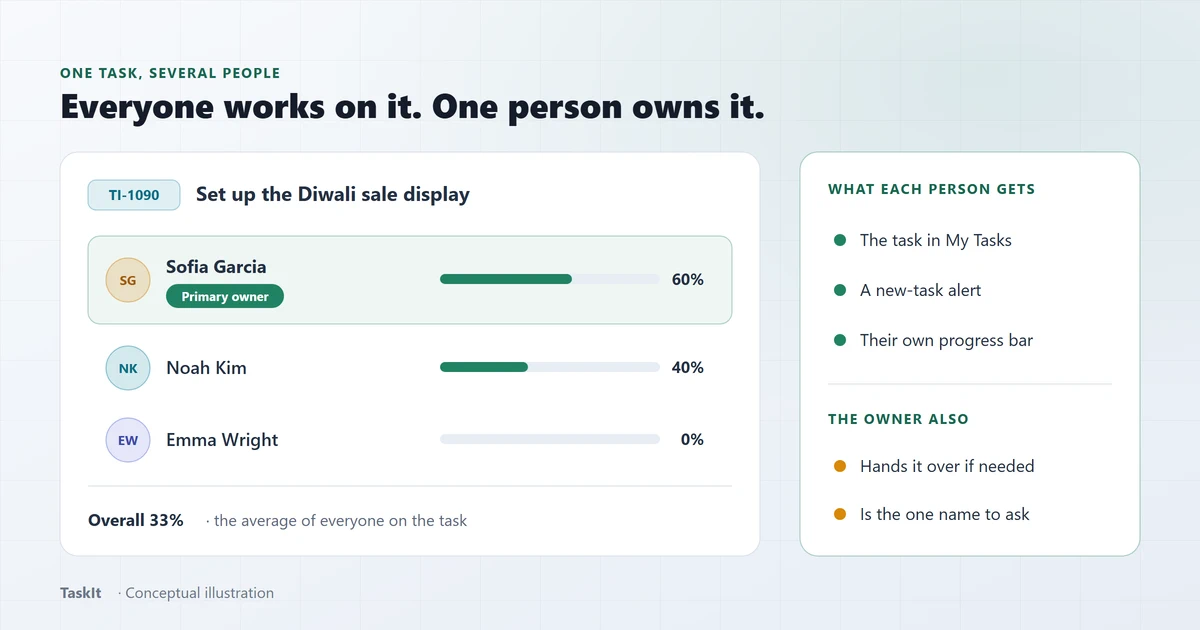
How to Assign One Task to Multiple People (and Still Know Who Owns It)
Several people can work on one task. One of them owns it. Here is how to set that up in under a minute.
Read article
Task Handover Process: How to Transfer Work Without Losing Context
The difference between a handover and a reassignment, the five things that must move with the work, and a process that survives leave, shift changes and blocked tasks.
Read article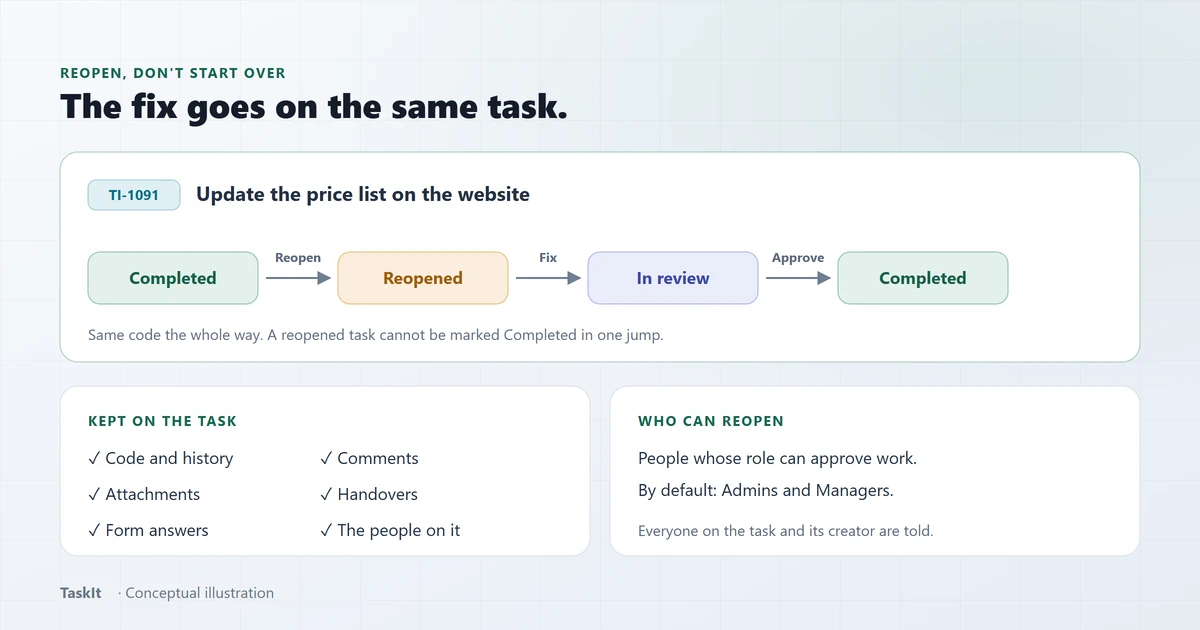
How to Reopen a Completed Task (and Keep Its History)
Something was missed after a task was marked done? Do not make a new task. Reopen the old one, so the fix sits next to the history.
Read article
How to Manage Recurring Tasks for Your Team
Why repeating work should be generated by a schedule rather than remembered by a person, and how to review the schedules you are already running.
Read article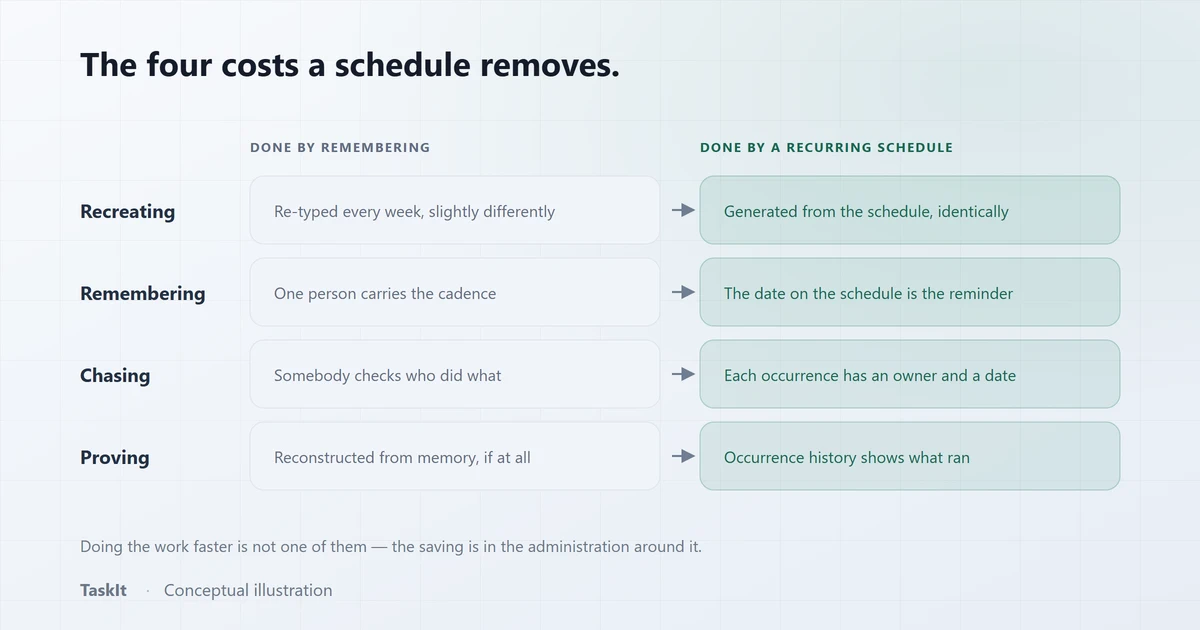
How Recurring Tasks Save Time (and Stop Work Going Missing)
The real cost of repeated work is not doing it — it is the recreating, remembering and proving around it. All three are removable.
Read articleThe rest of the blog
The same articles, grouped by the question they answer.
Task management
Definitions, first principles, and how task management differs from project and workflow management.
Browse categoryTeam productivity
What accountability is built from, and which performance figures are worth measuring.
Browse categoryBusiness operations
Rollout, notification channels and record-keeping for a business that is already running.
Browse categoryRun real work through it for 30 days
Every capability these articles describe is available during the free trial.